
Integrations in B2B: invoices, payments and shipping on one order
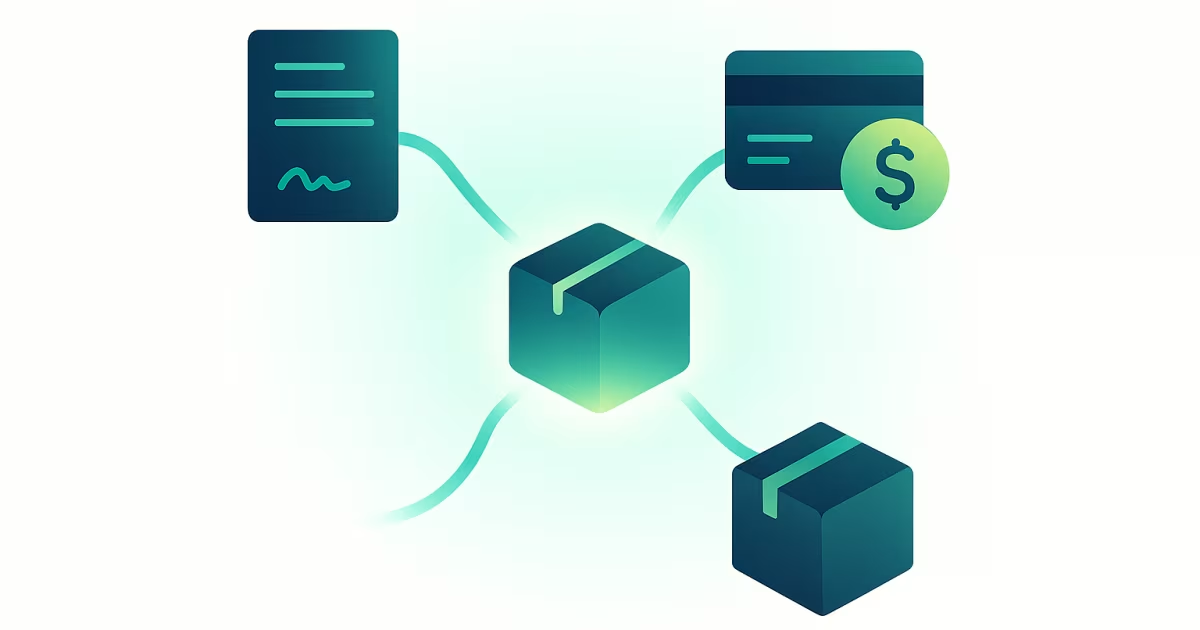
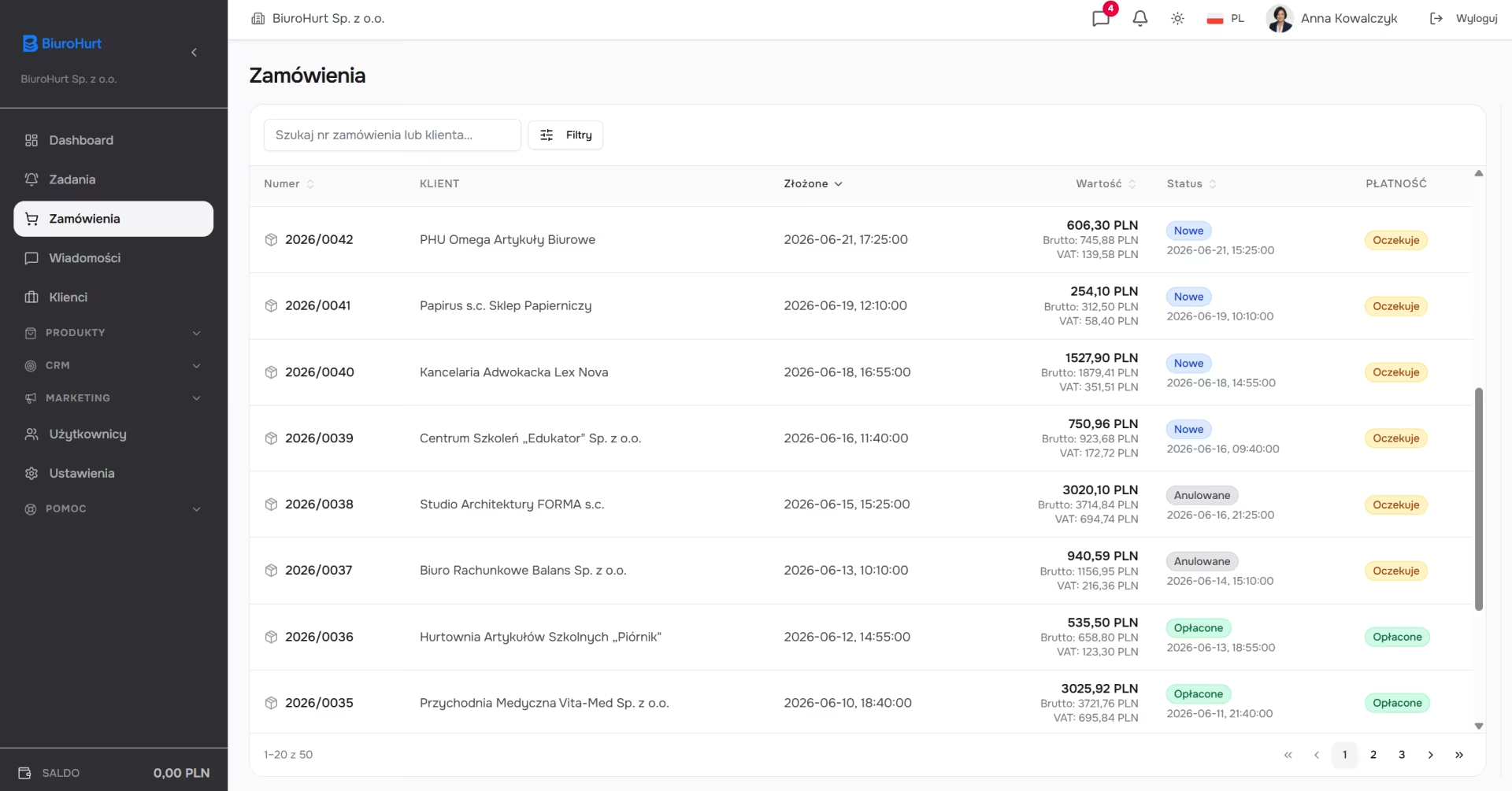
Most B2B companies already have an accountant, a courier and a payment gateway. The problem isn't that something's missing — it's that these tools work separately. Every order means copying NIPs, addresses and amounts from one window to another. Integrations are meant to end that: one order, with the invoice, payment and shipping happening on it, not alongside it.
Don't replace — connect
A good approach to integration isn't about replacing your tools with yet another "all-in-one." It's about connecting what you already use. You stick with your accounting and your courier — the only thing that changes is that they stop being separate islands.
Integrations that make a difference
Invoices — inFakt / Fakturownia
The invoice is created from the order data (the counterparty by NIP, line items, net amounts) through your accounting account — with submission to KSeF handled on the accounting side. You don't issue it by hand for every order.
Payments — online gateway + deferral
The customer pays right away with the gateway of their choice (Przelewy24, PayU, TPay, PayNow), and the system records the payment automatically. If they prefer terms — through PragmaPay they defer the payment, and you receive the full amount right away.
Shipping — InPost / Apaczka
The shipment is created in the panel from the order address — a label and a tracking number, without retyping the address into the courier's panel. The customer picks the parcel locker themselves.
Email — IMAP, Google, Microsoft
You connect the team's email inboxes (IMAP, Gmail / Google Workspace, Microsoft 365), and all correspondence with a customer — from every sales rep — is gathered automatically on their record in the CRM. A new rep sees the full context of the conversations, and emails don't get lost in private inboxes.
Integration isn't about having "more features." It's about data entered once — at the order — not having to be entered a second and third time somewhere else.
What you gain when it all works together
- Zero copying of NIPs, addresses and amounts between tools.
- Fewer mistakes — the data comes from a single source.
- Faster handling — from order to shipping without switching windows.
- Accounting consistency — the invoice describes exactly that order.
Where to start
You don't have to connect everything at once. Start with the one integration that pains you most — usually it's invoices. You add the rest once the first one works. Create a free account and connect your first tool, or head back to the Knowledge Base for more guides.
Read also
Materials for B2B customers: price lists and product sheets without e-mail
Price lists, product sheets, certificates and marketing photos. How to share them in the store so every customer sees exactly what they should.
Read article
Individual price lists in B2B: per-customer pricing without spreadsheets
A discount on a product group, a negotiated price on one item, quantity breaks. How to organise pricing agreements so the customer sees them without asking.
Read article
KSeF 2026: what changes in B2B sales and how to prepare
Structured invoicing is becoming mandatory. See what KSeF changes in everyday B2B sales and how to link orders to invoices without the chaos.
Read articleStart selling B2B under your own brand.
Free FreeSpace account: add a product, invite a customer, take your first order. No card, no commitment.
Create a free accountHave a question? Write to us.