
Deferred payments in B2B without losing liquidity

Selling on payment terms is standard in B2B — the customer wants to pay in 14, 30 or 60 days. The catch is that until they pay, you're financing their purchases out of your own pocket. It's possible to sell "on deferred terms" and still get your money right away. Here's how it works and what to watch out for.
Where the liquidity problem comes from
When you issue an invoice with a 30-day term, your cash is frozen for the entire month: the goods have shipped, the costs are incurred, but the payment hasn't arrived yet. With a few larger customers and longer terms, this can tie up the funds you need for day-to-day operations — restocking, wages, taxes.
The classic solutions are a working-capital loan or factoring your entire sales. Both work, but they can be expensive and rigid — they usually cover everything, including transactions that don't need financing at all.
Deferral on the buyer's side
A newer approach shifts the burden: it's the buyer who decides whether to defer payment or split it into instalments — and it's the buyer who bears the cost of that decision. You receive the full amount right away, as if the customer had paid up front.
In practice it looks like this:
- The customer places an order and, at checkout, chooses deferral or instalments.
- The financing provider (e.g. PragmaPay) pays you the full amount almost immediately.
- The customer settles up with the financier by the agreed date.
You still sell "on terms," just as before — but the liquidity stays with you, not with the customer. That changes the economics of every larger transaction.
When it pays off
- You have customers who expect payment terms and won't buy "up front."
- Individual orders are large enough that freezing the cash hurts.
- You don't want to factor all of your sales, only selected transactions.
- You want the buyer to bear the cost of financing, not the seller.
What to watch out for
Buyer-side deferral is not magic — a few things are worth keeping an eye on:
- Cost transparency for the customer — the buyer must clearly see how much the deferral costs before choosing it.
- The financier's limit and decision — not every transaction and not every customer will be granted financing; that's normal.
- Consistency with the invoice — the payment, invoice and order should describe the same transaction so the accounting adds up. We cover keeping this flow tidy in our piece on KSeF and structured invoices.
How it works in vendispace
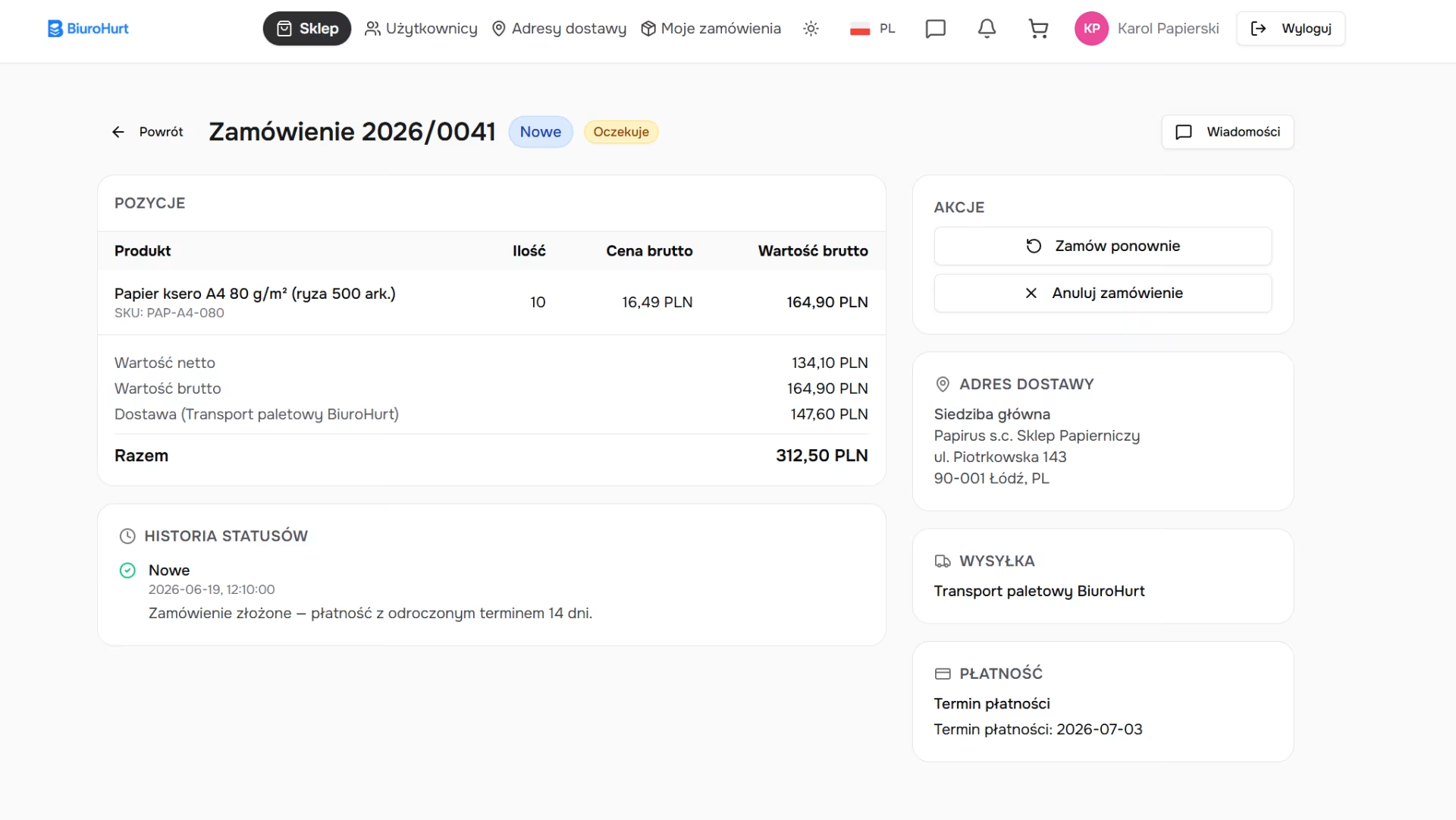
In vendispace, deferral and instalments via PragmaPay are wired directly into the order. The customer selects them at checkout, you get paid in full right away, and everything — the order, the invoice via inFakt/Fakturownia, the payment and the shipping — is described by a single, consistent document. No copying data between tools.
Want to stop financing your customers out of your own pocket? Create a free account and set up deferred payments on your own terms, or head back to the Knowledge Base for more practical guides.
Read also

Materials for B2B customers: price lists and product sheets without e-mail
Price lists, product sheets, certificates and marketing photos. How to share them in the store so every customer sees exactly what they should.
Read article
Individual price lists in B2B: per-customer pricing without spreadsheets
A discount on a product group, a negotiated price on one item, quantity breaks. How to organise pricing agreements so the customer sees them without asking.
Read article
KSeF 2026: what changes in B2B sales and how to prepare
Structured invoicing is becoming mandatory. See what KSeF changes in everyday B2B sales and how to link orders to invoices without the chaos.
Read articleStart selling B2B under your own brand.
Free FreeSpace account: add a product, invite a customer, take your first order. No card, no commitment.
Create a free accountHave a question? Write to us.