
Dedicated tools in B2B: an edge a price list can't copy
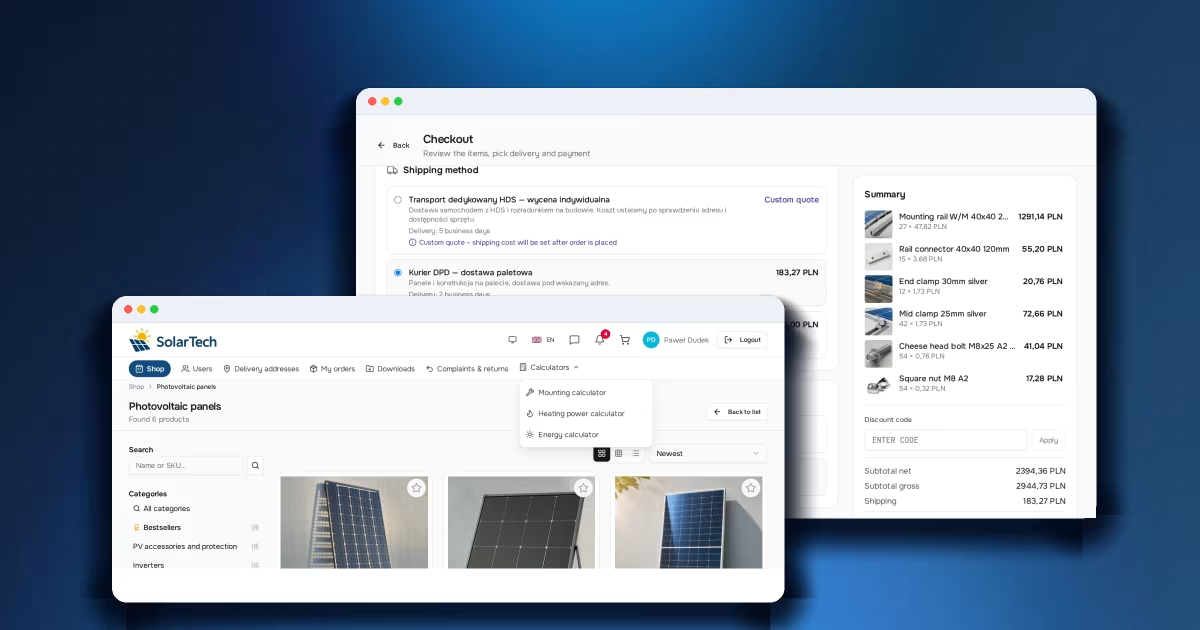
Two wholesalers in the same industry carry the same range, charge similar prices and have the same manufacturers behind them. The customer chooses one of them — and most often not because it was two percent cheaper, but because it took some work off their hands. A dedicated tool in a B2B store is the technical form of exactly that promise: not "we have it in stock", but "we'll calculate it for you, and the result will be an order straight away". This article is about where the advantage of such a tool comes from, when it works, and when it's an expensive gadget.
Why everyone in B2B starts to look the same
A distribution market always matures in the same direction. First the advantage is access to goods — whoever has them, sells. Then the advantage is logistics — whoever delivers faster. In the end both disappear: everyone has the goods, the courier goes everywhere, and the websites of five suppliers differ mainly in their logos. What's left is price — the only dimension where the difference is visible immediately.
Competing on price in B2B is particularly unpleasant, because the customer buys regularly and remembers. A discount you gave once becomes the reference point for every subsequent order, and a margin you gave up doesn't come back by itself. Worse still, a price advantage can't be defended: a competitor can copy it in an afternoon, because all it takes is making the same decision.
That's why it pays to look for advantages with a cost of replication: ones a competitor would have to build, not just decide on. Building takes time, during which your customers get used to what you offer. A tool dedicated to an industry is one of the few such advantages available to a distributor, because it comes from knowing how customers use the goods — and that isn't in the price list.
What a dedicated tool is, and what it isn't
The term has become broad, so let's narrow it down. A color configurator, a catalog filter and an "order wizard" are store features, not dedicated tools. A dedicated tool meets three conditions at once, and only all three together create an advantage.
1. It calculates what can't be read off a product card
The first condition is about substance: the tool has to do work the customer does anyway — only worse, more slowly, or in a spreadsheet nobody checks. It isn't about more convenient product search, but about answering a question the catalog doesn't answer.
In the renewable energy industry, that question is "how many mounting components do I need for this roof", "what size of heat pump will heat this building" or "how many kilowatt-peaks will cover this electricity bill". In the cable industry — choosing the cross-section and adding a reserve. In construction chemicals — coverage per pack for a given substrate absorbency. In printing — the cost of a print run for a specific format and paper weight. The common denominator: the answer depends on something the customer knows and something you know, and a single product page isn't enough.
2. It calculates on your catalog and your price list
The second condition decides whether the tool is yours or generic to the industry. A calculator that returns "you need about 40 metres of rail" is a guide. A calculator that returns specific items from your warehouse, at this particular customer's prices, with information about what's currently out of stock — is a sales tool.
The difference is sharper than it seems. You can see it in the choice of mounting rail length in the PV mounting calculator: a longer rail means fewer connectors but more waste. Which variant comes out cheaper depends on the price list — and the price list depends on who's calculating. An installer with a negotiated discount may get a different recommendation from a customer buying at base prices. A tool cut off from the price list can't make that choice, because it doesn't know the criterion.
3. It ends in an order, not a number
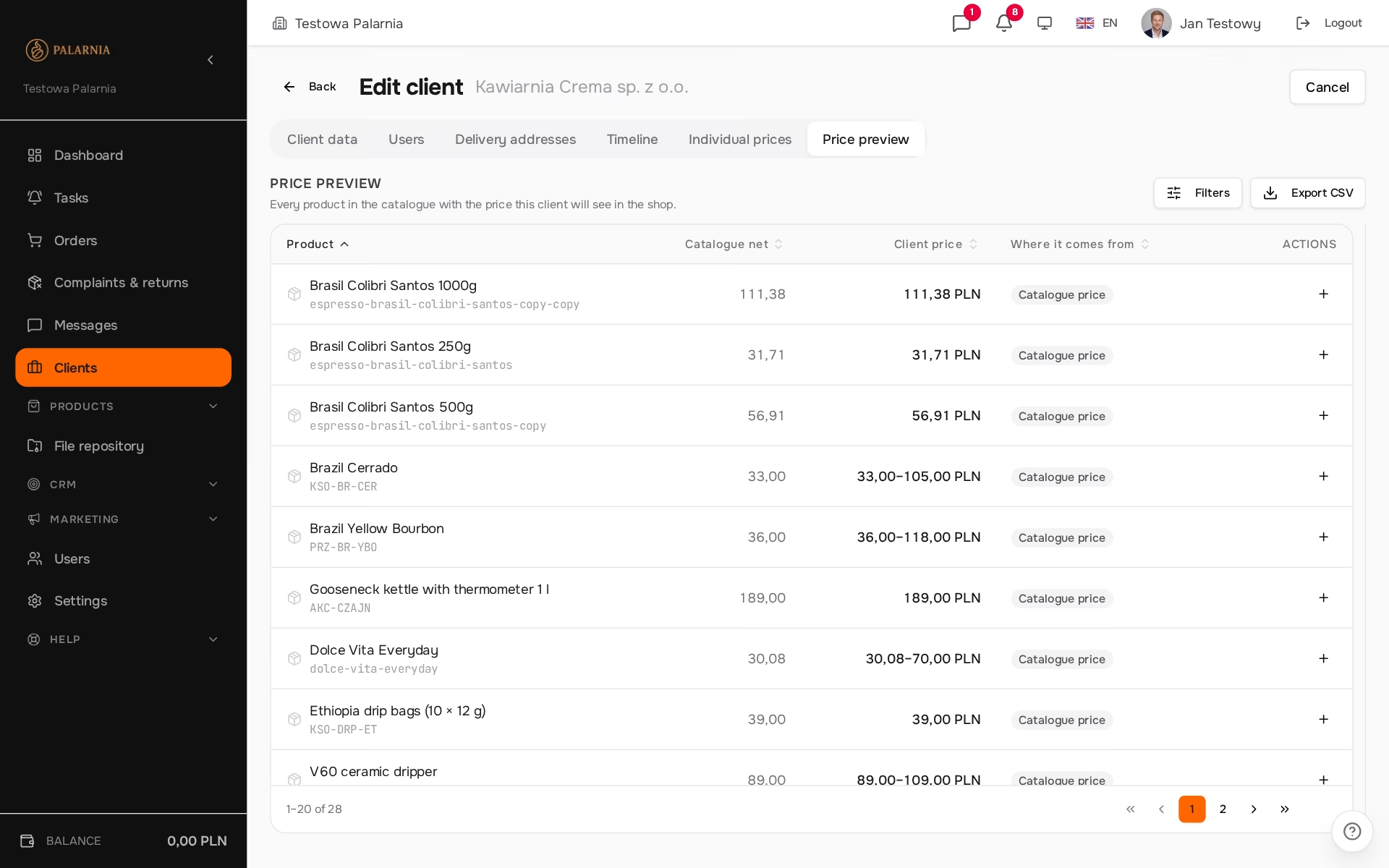
The third condition is the one most often overlooked, and it decides the return on the whole investment. A tool that ends with a result only moves the work one field further — someone still has to retype the items into the system. A tool whose result lands in the cart as ready order lines closes the loop.
This is where the tool stops being marketing and becomes sales. The distance between "I've calculated it" and "I've ordered it", measured in minutes, is the distance in which the customer can call someone else.
Four advantages in winning customers
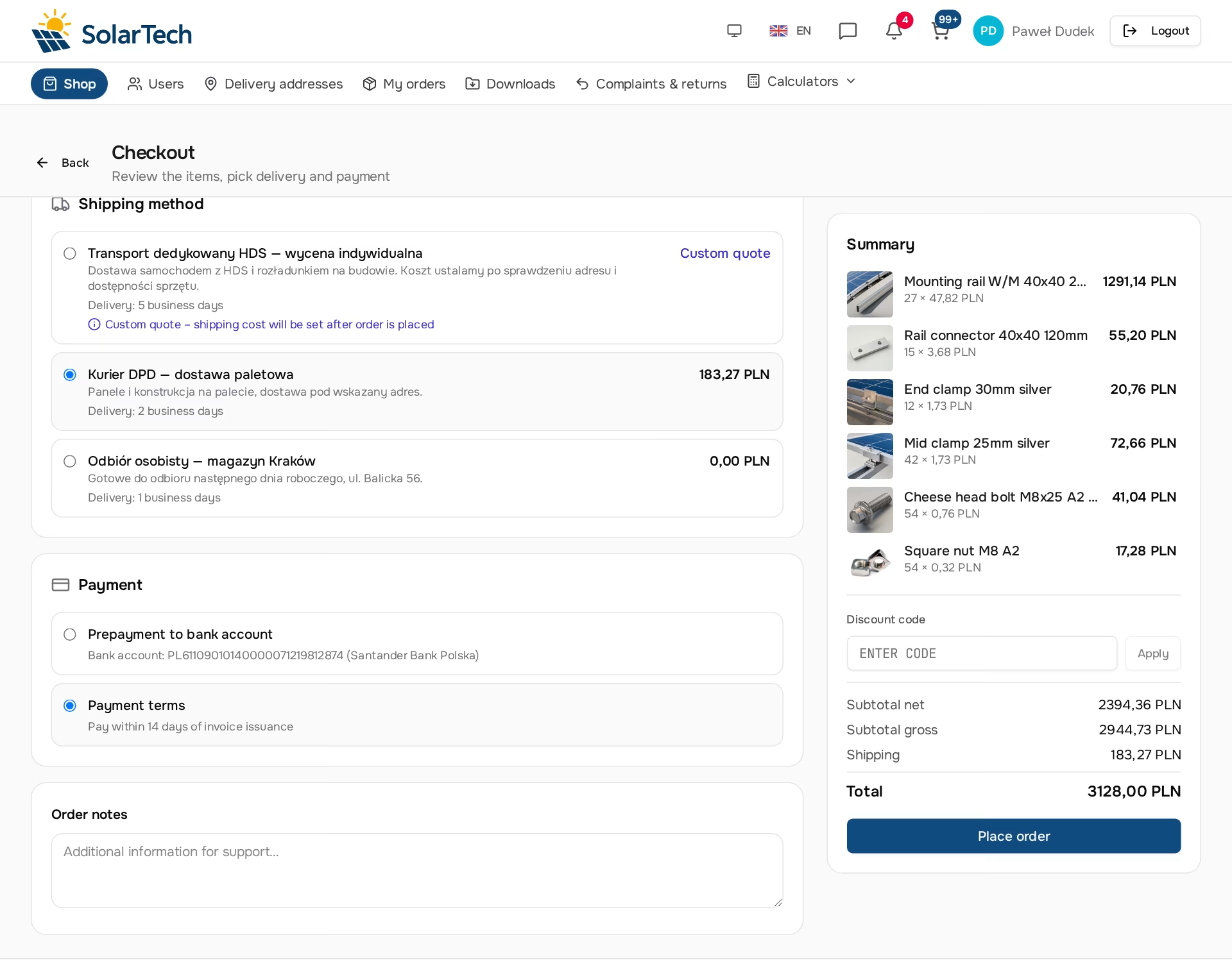
A dedicated tool works on the sales funnel in four different places, and each has a different dynamic and a different payback time.
1. It gives a reason for the first visit
A price list isn't a reason to visit. A customer looks at the price list when they already know they want to buy — that is, at the very end. A tool comes in much earlier, at the moment when the customer is still calculating, pricing and preparing their own quote for their own customer.
The advantage here is about timing: what counts is who gets into the conversation about the project first. A distributor whose calculator the installer uses to work out the mounting system is part of the project conversation a week before anyone asks about the price of a rail. The competition only shows up at the quote comparison stage — and then has to win on price, because it has no other argument.
2. It gives a reason to come back
The second advantage is stronger and builds more slowly. A tool in which the customer saves their calculations contains, after a few months, the history of their projects: twenty quotes they come back to, adjust one row of panels and order again.
This is called a switching cost, and it usually sounds like something unpleasant for the customer. Here nobody is locking anything in — the other wholesaler simply starts with an empty list. A customer who has a history of quotes with you starts the next project with you, because it's simply faster.
The same mechanism works with downloadable materials and order history. The difference is that a calculation is content created by the customer, not by you — so it matters more to them and is harder to recreate elsewhere.
3. It filters the quality of inquiries
The third advantage is invisible in traffic statistics, but very visible in a sales rep's calendar. An inquiry that comes in after the customer has used the calculator is a calculated inquiry: the customer already has the dimensions, the roof covering and the number of panels, and knows what they're talking about.
That removes the most expensive category of contact — the one where the sales rep spends twenty minutes establishing what the question is actually about. Instead of answering "how much does it cost" with no data, they answer a question next to specific numbers. If a conversation can be attached to the calculation — and in vendispace it can, because the chat is pinned to a specific record — the whole discussion happens next to those numbers, not in an e-mail where half the context is in an attachment.
4. It gives data you can't buy
The fourth advantage is long-term. A company whose customers do their quotes with it sees demand before it turns into orders: which system sizes prevail, which roof coverings dominate in the region, which heat demand comes up most often — and so which heat pumps will run short next quarter.
That is information about the market, not about sales — it also covers projects that ended up buying elsewhere. No sales report will show it, because a report only sees transactions that went through.
Why a spreadsheet isn't a dedicated tool
Almost every company that sells something requiring selection already has a spreadsheet. Usually a very good one, built over years by someone who knows the industry. But a spreadsheet loses on five fronts at once, and those five fronts decide everything else.
| Dimension | Spreadsheet | Tool in the system |
|---|---|---|
| prices | catalog prices or retyped by hand | this customer's price list, with discounts and quantity breaks |
| stock | doesn't know | item marked as unavailable before the order |
| versions | circulate by e-mail, drift apart | one, on the server side |
| result | someone retypes it into the system | ready cart lines |
| know-how | visible in the formulas once cells are unlocked | calculated on the API side, not disclosed in the response |
The most interesting row is the last one. A spreadsheet sent to a customer is a spreadsheet handed over to the customer — and, worse, to their competitors and yours. The formulas are inside, and sheet protection is a contractual safeguard, not a technical one. A tool that calculates on the server side can show the full result and the full bill of materials without revealing the weights or the order in which the parameters are applied.
There's also one thing a spreadsheet doesn't have at all: tests. Nobody runs regression checks on an algorithm in cells — a fix in one place breaks the result in another, and it comes to light a month later, with a complaint. The three renewable-energy calculators in the system have a full set of regression tests, run on every change to the algorithm or the data. They catch cases that aren't visible "by eye" but are visible in the quote.
The cost you have to count honestly
A dedicated tool isn't free, even if you don't pay for it separately. The cost sits in three places.
- Reference data has to be maintained. Material coefficients, fuel calorific values, source efficiencies, output tables — hundreds of entries that change rarely, but when they do change, they have to be changed everywhere. The sensible split is for the software vendor to maintain data shared by the whole market centrally (for us: 266 dictionary entries and 130 rows of the efficiency table), while the company contributes only what is truly its own — the catalog, prices and parameters on its own products.
- The catalog has to be described. The calculator only works on products with their parameters filled in: panel dimensions, heat pump operating range, module power. It's one-off work, but real — and it usually decides whether implementation takes a week or a quarter.
- The limits have to be admitted. A tool that answers every question stops being credible on the ones it really knows. The two roof coverings for which the mounting calculator deliberately returns no bill of materials aren't a gap — they're a signal that in this case the decision belongs to the covering manufacturer.
A tool sells when the customer can rely on it. One inflated quote costs more trust than ten correct ones build.
What it looks like technically: a module assigned to an industry
The biggest mistake with industry tools is building a separate product for them. The company then ends up with two systems: a store and a calculator, with two price lists, two customer lists and one person moving data between them.
The more sensible arrangement is the reverse: the platform first, the tool as a module on top of it. The store under the company's brand, prices negotiated with each customer, orders, invoices, deferred payments, shipments and documents work the same way in every industry. The company's industry decides only which additional modules are visible.
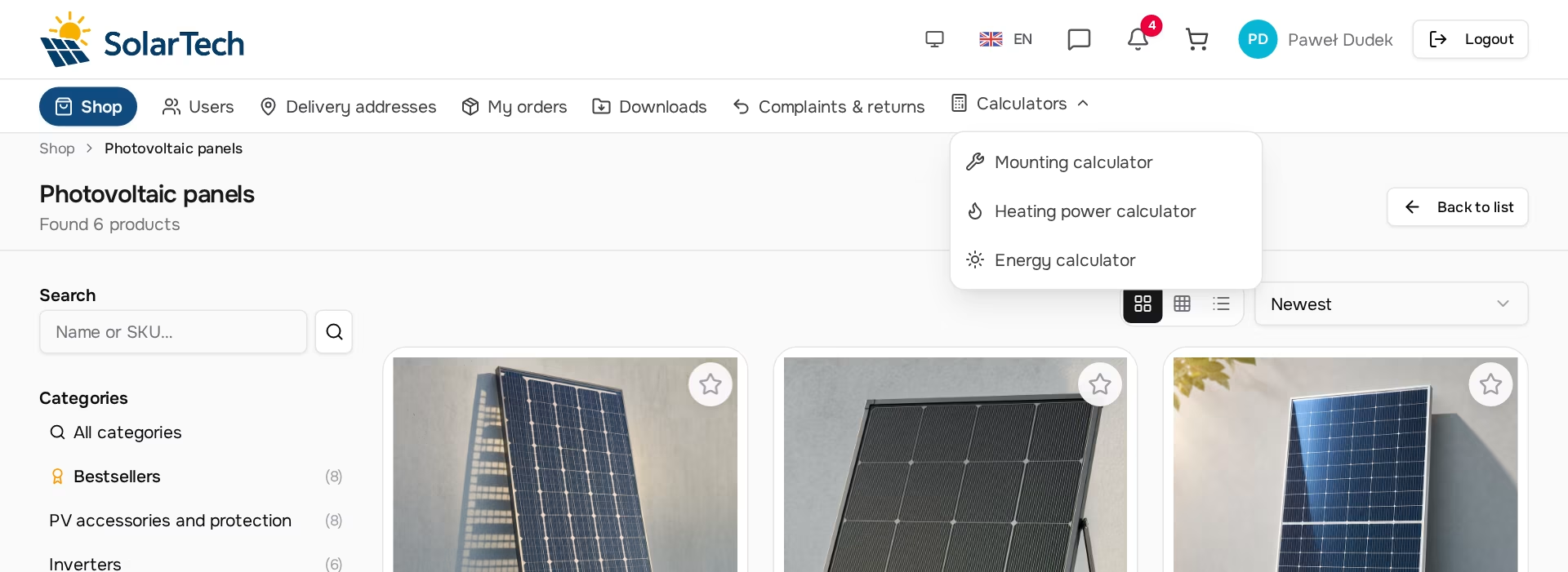
This gate has a few consequences that turn out to matter more in day-to-day work than the idea itself. A new company from a given industry gets the full set of modules automatically, without ticking anything by hand. An exception for a single company — switching one module on or off against its industry — is possible, but it's an exception, not the rule. The gate also works on the API side, not just in the interface, so a company outside the industry gets refused regardless of what its navigation shows.
For the company this means one practical thing: you can start without the tools. The store, the price list and the first customers work from day one, and modules are switched on when they're needed — it's a toggle, not a separate implementation.
When it's not worth building
There are situations in which a dedicated tool is an expense with no return.
- When the customer doesn't calculate. If orders in your industry consist of a repeating list of product codes, the tool you need is quick reordering from history, not a calculator.
- When selection is trivial. Anything that comes down to a single multiplication the customer will work out on their phone, and won't come back to your site for.
- When the answer requires a site visit. If every number is a guess without visiting the site, the tool will generate quotes that have to be withdrawn — and that's worse than having none.
- When you don't have a store yet. A calculator without a catalog, price list and cart is a guide. The order matters, because the third condition from the start of this article — a result that ends in an order — can't be met without a store.
Where to start
The order that doesn't waste money looks the same regardless of industry:
- Find the question customers ask your sales reps most often. Not the one you think is most important — the one that actually takes up the team's time. It can usually be identified after a week of listening in on phone calls.
- Check whether the answer can be calculated from data the customer knows. If the answer needs information the customer doesn't have to hand, the tool won't get filled in to the end.
- Set up the store and the price list. This is the foundation without which the tool has nowhere to deliver its result. A closed, invitation-only catalog has an advantage here, because every customer sees their own prices and a calculation is immediately their calculation.
- Describe the catalog with the parameters the algorithm needs. This is the most labour-intensive stage and the only one nobody will do for you, because it concerns your products.
- Switch the tool on for a few customers, not all at once. The first weeks will catch edge cases better than any tests — and an installer who helped catch them usually stays longer.
- Close the loop. Invoice, payment and shipment on the same order are what keep the time savings from evaporating at the last step; we describe this in the article on integrations in B2B.
Frequently asked questions
Isn't a dedicated tool overkill with a dozen or so customers?
With a dozen or so customers, what matters is something else: repetition. If the same customers come back with the same type of question several times a month, the tool pays for itself in the sales rep's time regardless of scale. If every case is different, it's better to start with the store and the price list.
Won't customers use the calculator to buy cheaper elsewhere?
Some will, and that's factored into the cost. In practice, the advantage is that a customer who calculated with you has a ready cart with you, while with a competitor they'd have to retype the list by hand. That's why the third condition — a result that ends in an order — matters more than the algorithm itself.
Am I not giving away my own know-how this way?
It depends on where the line is. The customer should see the result and the full bill of materials, because without them they won't order. But they don't need to see the breakdown into components or the parameter weights. The condition is that the gate sits on the server side — hiding a section in the interface leaves the data in the API response and protects nothing.
Who should maintain the coefficients and physical data?
The software vendor, if they're shared by the market — fuel calorific values, appliance efficiencies and climate zones aren't the property of any company. Only what is truly its own should stay on the company's side: the catalog, prices and parameters on its own products.
Can I start with the store and add the tools later?
Yes, and that's how it usually starts. Industry modules are a toggle on the vendor's side, not a separate implementation — the store, the price list and the first customers work regardless of whether the calculators are switched on.
How do I measure whether the tool has paid off?
By three things, in this order: the share of orders that came from calculations, the number of customers who return to saved quotes, and the sales rep's time per inquiry. The first is the easiest to measure, the third the hardest, but it's usually the one that settles the math.
Wouldn't a simple calculator on the website, without logging in, be better?
As a lead magnet — sometimes, yes. But a calculator without login doesn't know this customer's price list, doesn't know the stock levels and has nowhere to deliver its result. So it returns an estimate, not an offer, and builds none of the four advantages described above except the first.
What if my algorithm is better than what the system vendor has?
That's a good situation, provided the algorithm can be described with formulas and tested. When moving someone else's algorithm into the system, the most important thing is to preserve the results the company has built its quotes on — you may only fix what can be called an error, and only after naming it as such.
How much does it cost in vendispace?
There's no separate fee for industry modules and no commission on sales — you pay for the plan, and modules are switched on for companies in the relevant industry. We've described the three renewable-energy calculators in detail on the renewable energy industry page.
Which industries besides renewable energy does this make sense for?
Anywhere the customer has to calculate something before buying, based on data they provide themselves: electrical and cables, ventilation, construction chemicals, insulation, fencing, printing, packaging. The test is simple — if your company has a spreadsheet that sales reps send to customers, that's a candidate for a dedicated tool.
We've described what this advantage looks like in a specific industry in three separate articles: the PV mounting calculator, the building heat demand calculator and the PV system size calculator. Create a free account, set up your store and get in touch if your industry also has a spreadsheet doing the rounds by e-mail.
Read also
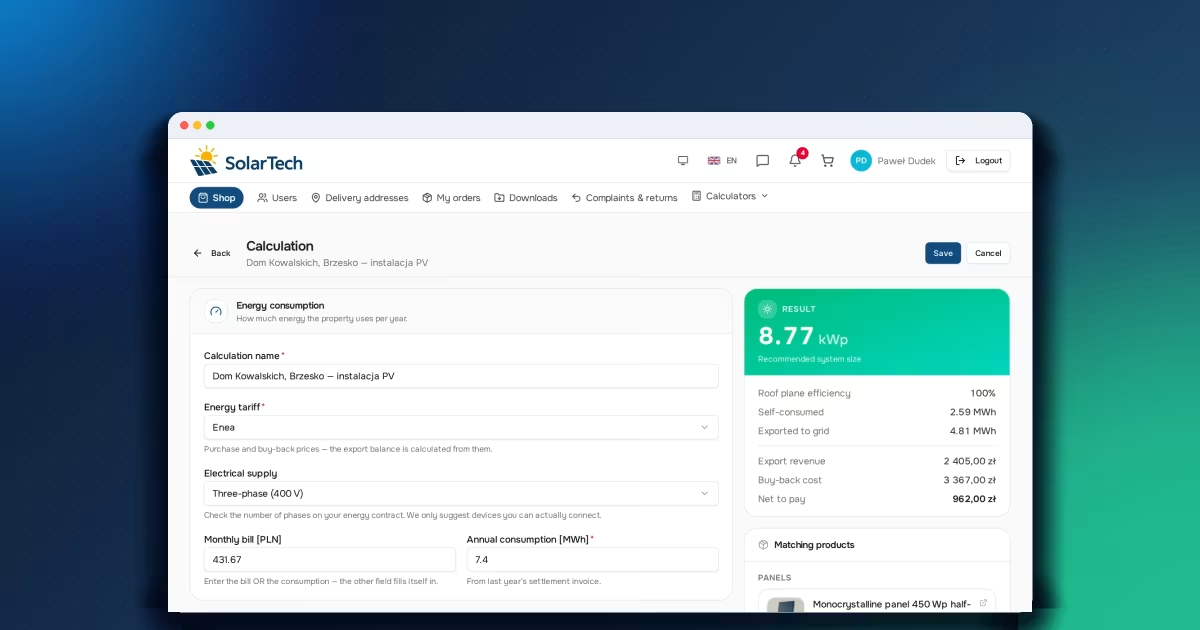
PV system size calculator: how an electricity bill becomes 8.77 kWp
The bill, roof efficiency, the balance of energy exported to the grid. Where a PV system's target size comes from and why it's higher than it seems.
Read article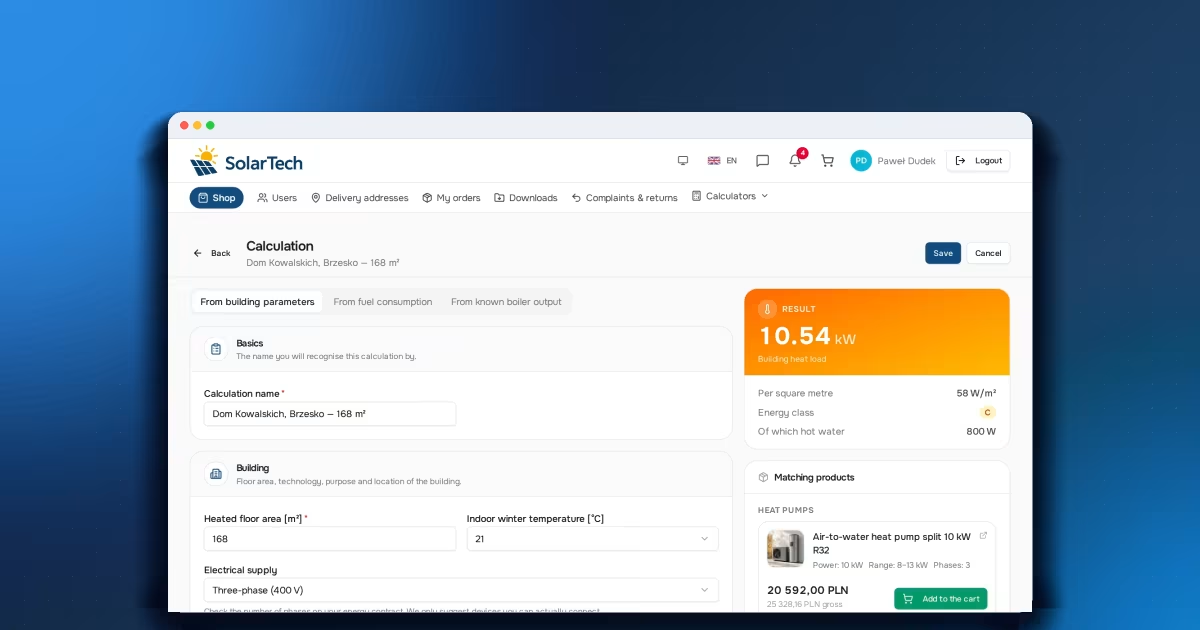
Building heat load calculator: where the number behind the quote comes from
Three input modes, a starting point and adjustments. How building parameters, fuel consumption or boiler output turn into a heat load figure.
Read article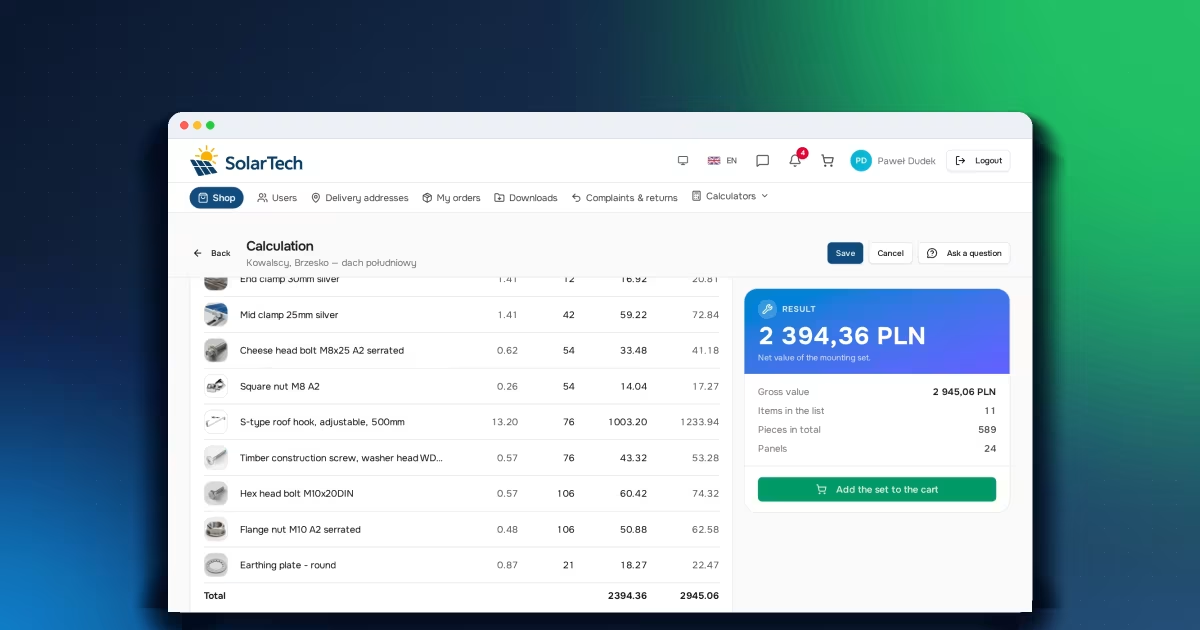
PV mounting calculator: how panel rows become a bill of materials
Clamps, rails, hooks and roof fixings. How panel rows and the roof covering turn into a complete, priced mounting kit and a ready-made cart.
Read articleStart selling B2B under your own brand.
Free FreeSpace account: add a product, invite a customer, take your first order. No card, no commitment.
Create a free accountHave a question? Write to us.